FLOATING GARDENS
CREATE LIVING GARDENS ON EXISTING HARD SURFACES.
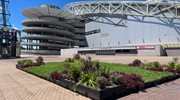
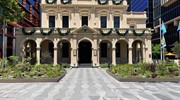
Future Village's Floating Gardens transform rooftops, plazas, courtyards and other hard surfaces into thriving green spaces without the need for conventional in-ground gardens.
Built predominantly from our modular Garden Trays, Floating Gardens introduce lawns, native vegetation, shrubs and groundcovers into spaces where excavation or permanent landscaping may be impractical.
Our freestanding garden systems incorporate water reservoirs, wicking irrigation and stormwater management to support healthy plant growth while reducing ongoing maintenance requirements.
Designed for quick installation and long-term flexibility, Floating Gardens can be configured to suit different spaces, incorporate bespoke edging and planting designs, and be relocated or reconfigured as requirements change.
From small rooftop gardens to large-scale urban greening projects, Floating Gardens provide a practical way to bring nature back into the built environment.
Key benefits
Green existing surfaces
Create living gardens on concrete, paving, asphalt and suitable rooftops.
Reduce urban heat
Vegetation and growing media help reduce exposed surface temperatures.
Water-smart
Integrated reservoirs and wicking systems reduce irrigation demands.
Flexible designs
Combine modular trays into lawns, garden beds and bespoke green landscapes.
Simple installation
Prefabricated modules minimise excavation and site disruption.
Relocatable & reusable
Individual trays can be moved, replaced or reconfigured as requirements change.
THE SYSTEM BEHIND FLOATING GARDENS
Our modular Garden Trays make Floating Gardens possible.
Each 1.2m × 1.2m tray combines growing media, integrated water storage and wicking irrigation in a self-contained, relocatable unit. Trays can be connected to create large garden areas, with options for different planting depths, lawn surfaces and perimeter finishes.
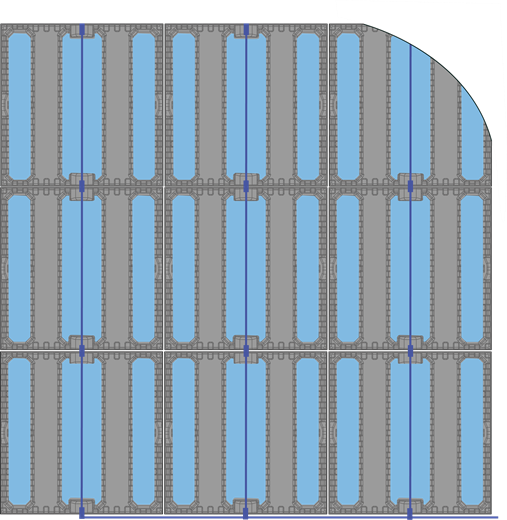
Tray configuration example

GREEN INFRASTRUCTURE BACKED BY RESEARCH
Future Village has worked with the University of Technology Sydney to investigate how modular gardens can reduce urban heat.
Through laboratory studies, field trials and computer modelling, our research has examined the cooling performance of different vegetation types, growing media and garden configurations.
These findings inform our plant selection and garden design, helping us deliver green infrastructure with measurable environmental benefits.

FLOATING GARDEN EXAMPLES