OUR WORK 2025 - 2026
Parklets — Joondalup 2025
In 2025, Future Village partnered with the City of Joondalup to design, build and install a series of modular parklets as part of the Joondalup City Centre Place Activation program.
The parklets were delivered as flexible, relocatable public-space assets, providing shade, seating, tables and bike parking to support alfresco activity and encourage people to linger longer in the City Centre. Designed in line with the City’s Draft Guidelines for Alfresco Spaces, the parklets enable increased street activation while remaining adaptable for use across multiple locations.
The canopies, seating, raised decking, planters and wave furniture was constructed to allow easy relocation over time and will continue to support Joondalup’s long-term placemaking and economic activation objectives.


Pergola Parklet - Springwood 2025
In 2025, Blue Mountains City Council commissioned Future Village to deliver a custom Pergola Parklet to support a range of local businesses within the Springwood town centre.
The standard pergola design was adapted to suit the site, with one end bench removed to create additional open space and a permanent table installed at the opposite end to improve functionality and user comfort. The parklet was also upgraded with composite timber cladding internally and externally, aligning the structure with the surrounding architectural character of the precinct.
The parklet occupies one car space and has been designed for easy relocation via tilt tray, providing Council with a flexible and long-term public realm asset.


DDA Picnic Tables - Kangaroo Island 2025
In 2025, South Australia National Parks and Wildlife Service engaged Future Village to design and supply six DDA-compliant picnic tables for installation across Kangaroo Island.
To minimise shipping and transport costs, the tables were modularised for efficient transport and on-site reassembly. Each unit was engineered for durability and long-term outdoor performance, using FSC-certified Australian Blackbutt hardwood and finished with three protective coats to ensure low maintenance and extended service life in coastal conditions.
The result is a robust and accessible public asset, designed to withstand heavy use while complementing the natural landscape.


Pergola Parklet - Shellharbour 2025
Shellharbour City Council commissioned a Pergola parklet that could be moved and support a variety of local businesses in the city centre.
We modified our Pergola parklet to enable cladding inside and out using composite timber to fit more in line with the local architectural feel of the town centre. The parklet takes up 1 car spot and can easily be moved via tilt tray.


Penrith Beach - 2025
In 2025, Future Village continued its collaboration with the NSW Department of Planning, Housing and Infrastructure to enhance the seasonal public amenities at Penrith Beach, a free summer swimming destination for the local community.
Building on the 2024 installation of pavilions, sunbeds and seating, the 2025 upgrade introduced new shade sails, 20 outdoor umbrellas set into sandstone bases, and a refreshed furniture colour palette to further improve comfort, usability and visual appeal across the precinct.
The result is a highly activated and welcoming public space, supporting large visitor numbers while strengthening the identity of Penrith’s flagship summer destination.


Hanging Baskets - Belmont 2025
In 2025, the City of Belmont partnered with Future Village to deliver a large-scale hanging basket program to enhance the Faulkner Park Civic Precinct.
A total of 100 hanging baskets were installed across 50 light poles, creating a vibrant and welcoming streetscape around the precinct. The program forms part of Belmont’s broader commitment to improving public amenity and activating key civic spaces through high-quality urban greening.
All growing-out and ongoing maintenance is being managed by Future Village’s Western Australian operations team, ensuring consistent presentation, plant health, and long-term performance.


Modular Parklet - Guildford 2025
Cumberland City Council tendered for the creation of a parklet in Guildford to support local businesses and increase street activity. Future Village was engaged to deliver a modular, low-maintenance design that could be installed quickly while providing a welcoming, functional space for outdoor dining.
We supplied a modular parklet system using our hinged decking, which allows easy access to the gutter while maintaining a seamless, trip-free transition between the footpath and the parklet. Safety was achieved through the use of concrete barriers fitted with our Saddle Planters, which were then clad to elevate the overall appearance and integrate with the streetscape.
The parklet was completed with bench seating, outdoor tables and fixed furniture, all securely mounted to the decking to ensure durability and stability in a high-use environment.

Modular parklet - Altona 2025
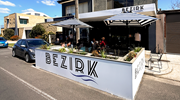
Future Village designed, built and installed this modular parklet for Bezirk Café in Altona, Victoria. The original parklet, built on site with inappropriate materials had come it's life's end.
The new parklet features our PlanterBarrier safety system, wicking planters for low-maintenance greenery, and a simple irrigation refill system. The design allows the café to expand its footprint for patrons while maintaining accessibility and street safety — all within a single car space.
Using our modular hinged decking system, the parklet provides a seamless, no-trip transition between the footpath and deck, while still allowing easy access to the gutter below.
Installed in just two days, this project demonstrates how adaptable, fast-to-install parklets can transform urban streets into vibrant community spaces.

Modular Parklet - Randwick 2025
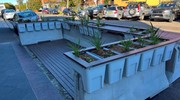
Randwick City Council commissioned a modular street parklet. This parklet is our first parklet using the Saddle planter system that sits directly on top of a concrete barrier. We have then added composite board facading and capping to the planters.

AviaryQ 2025
Campbelltown City Council transformed a disused aviary in the heart of the town centre into a welcoming public space. Future Village was engaged to help bring the area to life with practical and inviting elements. We designed and installed custom shade sails, festoon lighting, mature planters, and a tailored irrigation system—creating a vibrant, green setting ready for community use and activation.


Toukley Parklet 2025
To revitalise the former taxi rank at Toukley, Central Coast Council aimed to introduce greenery, shade and flexible seating options. Outside the local Coles, a large public bench was also needed—designed to sit over tree roots and provide a comfortable waiting spot for passers-by.
Future Village delivered a custom parklet solution featuring our DDA-compliant picnic table and integrated timber deck seating. We incorporated Stonelite planters with internal wicking systems for low-maintenance planting to add colour and character to the streetscape.
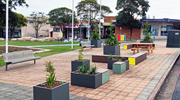

Pergola Parklets - Logan 2025
Logan City Council needed parklets that offered weather protection and could be easily relocated. Our Pergola Parklet was the ideal fit. Two units were purchased and will rotate across the city, helping to activate spaces and support local businesses year-round.
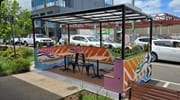
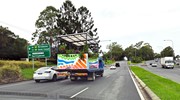
Crookwell Pergola parklet 2025
To help activate Crookwell’s main street, Upper Lachlan Shire Council partnered with us to transform nose-to-kerb parking into a vibrant public space. Using our modular decking system, we integrated a Pergola Parklet to create a generous and shaded area for the community to gather, relax and connect.
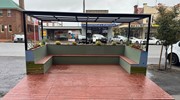
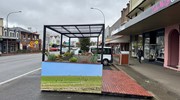
Camberwell Grammar School chill out zone 2025
We were asked to design a space that was currently a concrete pad with two seats into an attractive area for students to gather in, providing a variety of seating options. The design also requested the inclusion of the two large plain trees on site.

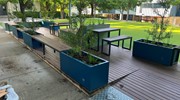
Temporary Road Closure - Hobsons Bay 2025
The city council wanted to trial closing Forrest Street and through the 3 month trial closure period activate with seating, shade and greening to make a modular parklet. We designed, supplied, installed and maintained the activation.
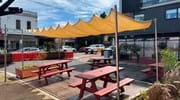
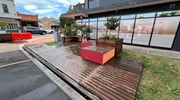
Portable Solar Misting Tower 2024 -25
Urban heat remains one of the biggest challenges in public spaces. While plants play a critical role in cooling, water is also highly effective. After finding limited options for freestanding misting units, we designed and built our own. The result: a solar-powered misting tower that’s fully self-contained, easily relocatable, and integrates greenery. Bendigo City Council installed the first unit—helping cool the community through the peak of summer.


Urban Heat Island Mitigation Trials 2024-25
As part of funding by the NSW Chief Scientist we have continued to quantify the benefits of our Garden and turf trays to lower heat. We undertook trials at Sydney Olympic Park, Parramatta Square and on a roof top at the University of Technology and initial results are very positive in the role that Green Infrastructure can have to help alleviate heat. Further results will be published in our Urban Heat Island mitigation section